Complete Health Collective: A WordPress-to-Squarespace Migration Case Study
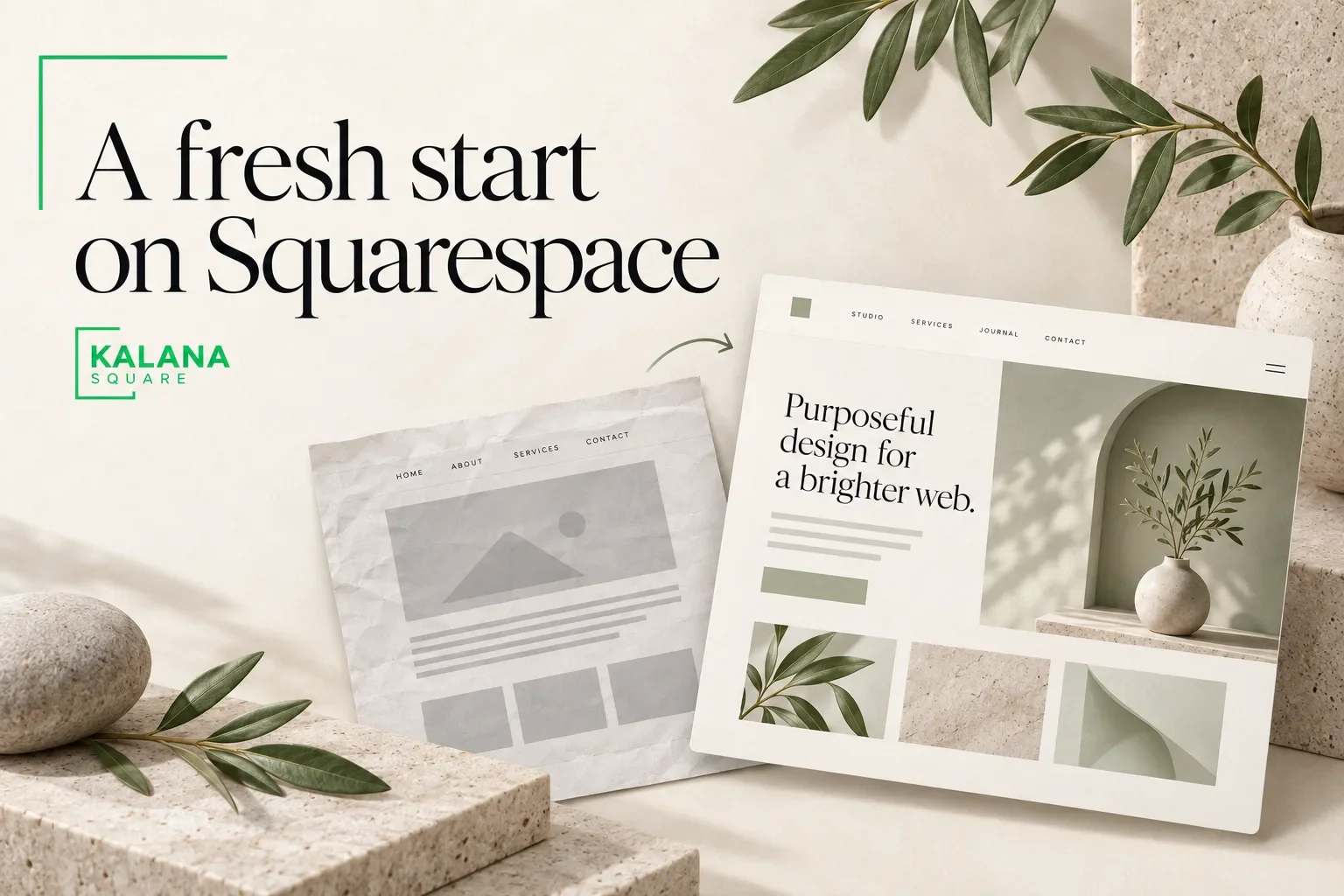
Moving a website to another platform creates an opportunity to improve its structure and presentation. It also creates work that is easy to overlook: checking content, matching URLs, reconnecting integrations and testing the launch.
Complete Health Collective is a wellness-focused project in my portfolio that combined a WordPress-to-Squarespace move with a redesign. The published record documents the rebuild and its design direction, rather than a measured SEO or conversion result.
This article explains that documented work and uses it as a starting point for a practical migration discussion. The planning recommendations below should not be interpreted as an undocumented list of tasks performed on this specific project.
The documented project
The portfolio identifies Complete Health Collective as the client and describes my role as redesigning and rebuilding the website in Squarespace after moving it from WordPress.
The published solution focuses on improving layout, structure and user experience, with a clean brand-appropriate design, responsive layouts and intuitive navigation.
You can view the project summary and website preview in the Complete Health Collective portfolio entry.
No verified traffic increase, ranking retention figure or enquiry improvement is available in that summary. Those results are therefore not claimed here.
Why migration and redesign are separate decisions
A platform move changes where the website is built and managed. A redesign changes how the content and user experience are presented. The two can happen together, but one does not automatically require the other.
A business might want to retain a familiar design while simplifying editing. Another might need a new structure because its services have changed. A third may benefit from keeping valuable pages while rebuilding only the parts that no longer work.
Before starting, write down the reason for the platform move and the reason for each major content or design change. This keeps the project focused on business requirements rather than change for its own sake.
Begin with a content inventory
For a new migration, I would first identify the pages, articles, images, downloadable documents and integrations that need to be considered.
The inventory should record which content will stay, which needs editing and which may be retired. Important pages should not disappear simply because they do not fit the first design concept.
Ask who owns the final copy and who will approve it. For wellness businesses, service and health-related statements need appropriate client review. A design project is not permission to make stronger claims about the service.
Preserve copies of the original material before making substantial changes. That gives the team a useful reference during review.
Plan the new structure around the current offer
A wellness website may need to explain several services, introduce practitioners and guide visitors towards an enquiry or appointment. The navigation should reflect those real choices.
Avoid carrying confusing structures into the new platform just because they already exist. Equally, avoid replacing useful structures without identifying a problem.
Map each important visitor question to the page that answers it. For example, service information and appointment instructions should be easy to connect, while detailed biographies can sit on their own pages.
The goal is a clearer journey, not simply a different visual arrangement.
Make a deliberate URL plan
When old URLs change, plan where they should lead. Preserve useful URLs where practical, and map changed pages to the closest relevant destination.
Google’s site-move guidance recommends preparing URL mappings, using appropriate redirects and monitoring the move. It also notes that ranking fluctuations can occur while a site move is processed. Read Google’s migration guidance.
Do not redirect every removed page to the homepage. Someone following an old service link should reach an equivalent or closely relevant page where one exists.
Redirect planning reduces avoidable disruption; it does not guarantee unchanged rankings. That distinction should be clear in any migration proposal.
Review integrations independently
A website may rely on booking, email, payments, forms or an external client system. Moving the public pages does not automatically reproduce every connected workflow.
List each integration and identify how it will work in the new setup. Test the required outcome rather than assuming an embed or link is sufficient.
For example, an appointment route should be checked through confirmation. A contact form should be tested at the receiving destination. A mailing-list form should use the correct list and consent wording.
Document any third-party subscriptions the business must continue paying after launch.
Keep the brand, improve the usability
A redesign can make the website more coherent without discarding everything customers recognize. Review the logo, colours, imagery and tone to identify the elements worth retaining.
Use the new layout to improve hierarchy and readability. Visitors should understand the offer and next step without having to interpret decorative language or search through long sections.
For image-led wellness sites, balance atmosphere with information. Photography can establish a mood, but it should not replace accurate service descriptions or practical appointment details.
Test before and after the domain switch
Before launch, review the site’s main pages and customer journeys on desktop and mobile. Check links, forms, page titles, images and any booking process.
After launch, repeat the important tests on the live domain. Confirm that relevant old links reach the intended new pages and that analytics, if included, are receiving the expected events.
Keep the old website’s records available until the handover is complete and any essential data has been preserved. Domain and email settings should be handled carefully so a website move does not accidentally interrupt business email.
What success should mean
The first measure of a migration is whether the agreed content and functionality are working on the new site. Usability, maintainability and presentation are also meaningful outcomes when they were part of the brief.
Longer-term business results require separate measurement. Track relevant enquiries, bookings and search performance over suitable periods, while considering other changes in marketing or demand.
For this portfolio project, the evidence supports discussing the delivered rebuild and design direction. It does not support a numerical growth claim.
Frequently asked questions
Can every WordPress feature move directly to Squarespace?
Do not assume so. Review the content types, plugins and integrations individually. Some functions may need a different tool or a changed workflow.
Will moving platforms improve SEO automatically?
No. A migration can address technical or content problems, but it can also introduce disruption. Planning and monitoring remain important.
Should I redesign during a migration?
Only if it serves a clear purpose. Keeping more elements stable can simplify the move; combining projects may be useful when the old structure no longer fits the business.
Plan your move with a clear scope
If you are considering a move from WordPress, I can assess the pages, functionality and design changes involved. Explore my Squarespace migration service, then book a discovery call to discuss your website.