Destination Exploration: A Squarespace Travel Website Case Study
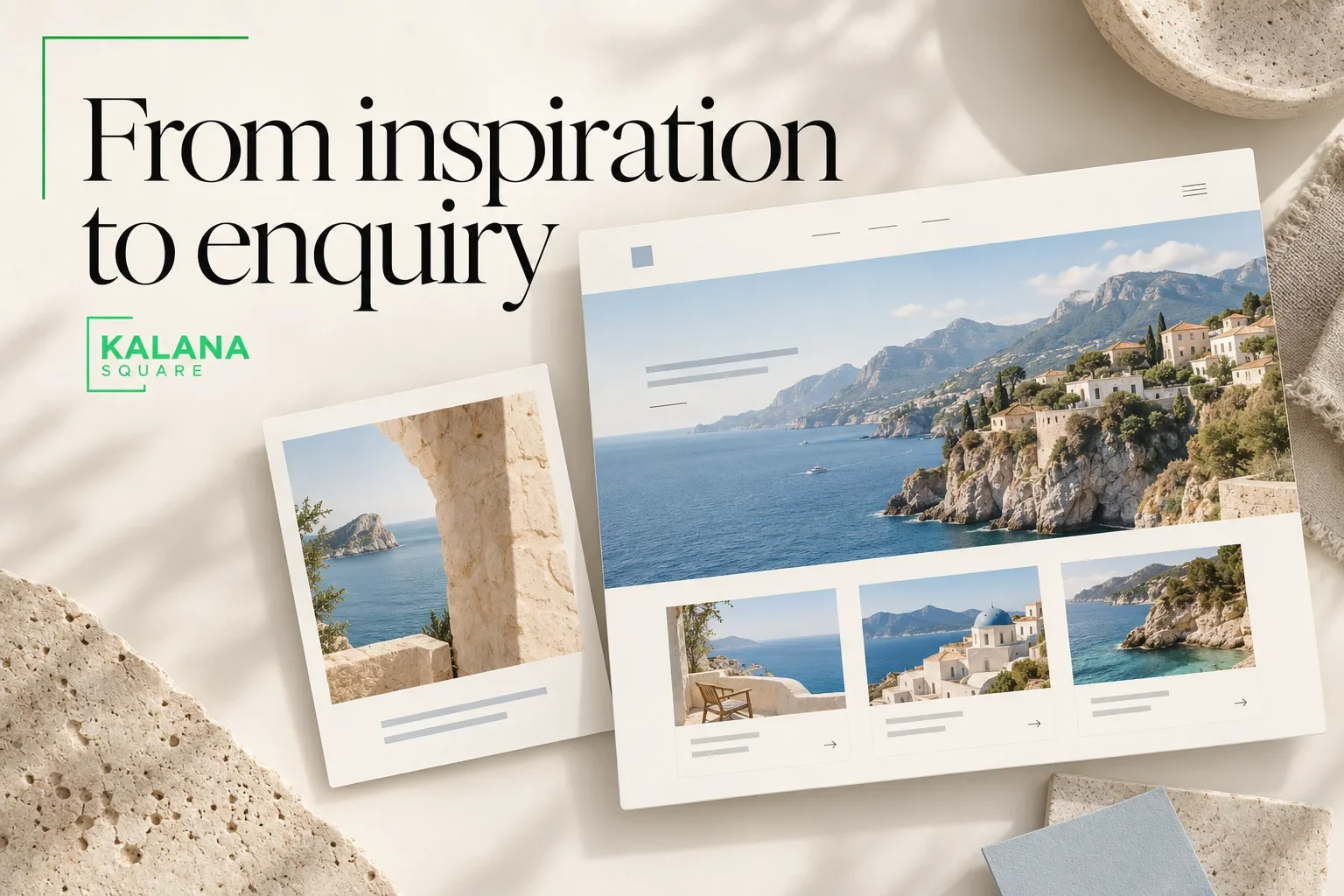
A travel consultancy website should help people imagine a trip while explaining how the business will help them plan it. Attractive destination images create interest, but visitors also need to understand the service and the next step.
Destination Exploration Travel is a useful project reference for this balance. This article covers the published Squarespace project scope and practical lessons for travel businesses planning a clearer website.
The client and project scope
Destination Exploration Travel is a Florida-based travel consultancy. Kalana Square’s portfolio describes a responsive Squarespace website with custom destination modules presenting travel packages, an integrated blog and lead-capture forms. Squarespace and Figma are listed as project tools. View the Destination Exploration Travel project
The documented goal was to combine destination presentation with an enquiry-focused website. The public portfolio does not publish measured traffic, conversion or revenue changes, so those outcomes are not claimed here.
The sections below draw practical design lessons from this type of scope. They are recommendations for travel consultancy websites, not a record of undocumented decisions or results from the client project.
Explain the planning service early
Travel websites can leave visitors unsure whether they are browsing a booking engine, reading inspiration or hiring a consultant. Explain the business model near the beginning of the journey.
Describe who the service is for, the types of travel it supports and how a planning conversation begins. If the business specializes in particular destinations or trip styles, make that focus clear.
Avoid suggesting that every visible trip is instantly bookable unless that is how the service operates. A consultation-led website needs different expectations from a store selling fixed departures.
The main action should match the process: enquire about a trip, discuss travel plans or request a consultation.
Organize destinations around the visitor’s questions
Destination modules can help people explore a collection without reading one long page. Their labels and supporting text should explain more than the country name.
Consider the choices a prospective traveller is making. They may be comparing experiences, travel styles or the level of planning support they need. A useful introduction can help them identify a suitable route.
Do not create dozens of thin destination pages simply to cover more keywords. Each page should provide meaningful information and reflect a service the business can actually deliver.
Keep navigation consistent so visitors understand how destination information relates to the broader planning service.
Give beautiful images practical context
A strong photograph can communicate atmosphere quickly, but it does not explain an itinerary, accommodation standard or what is included.
Use concise text to clarify whether an image represents an example experience, a specific package or general inspiration. Avoid implying that a pictured hotel or activity is included when it is not.
Confirm image rights and maintain accurate captions where identification matters. Prepare useful mobile crops so the subject remains clear on smaller screens.
The visual style can feel premium while the information remains straightforward. Clarity is especially valuable when the eventual trip involves a significant commitment.
Explain what happens after the enquiry
A prospective traveller may hesitate because they do not know what a consultation involves. Explain the sequence using the business’s actual process.
That might include an initial discussion, a planning proposal, agreement on scope and later itinerary development. Only describe stages that the business genuinely offers.
If planning fees, deposits or service boundaries apply, make the relevant information easy to find. Avoid promising free planning if the service includes a charge at a later stage that visitors would reasonably want to understand.
Clear expectations can help the business receive more suitable conversations, even though the website alone cannot guarantee enquiry quality.
Use forms to begin a useful planning conversation
A travel enquiry form can gather destination interests, approximate dates, traveller numbers and the type of experience requested. Ask for enough information to prepare a response without turning the first contact into a complete itinerary brief.
Use flexible answers where plans may still be uncertain. Someone researching a trip may know the season but not the exact dates.
Explain which information is optional and what happens after submission. Keep sensitive travel documents and payment details out of a basic introductory form; use the business’s appropriate process if those are needed later.
Test notification delivery and the confirmation message from a real phone.
Give the blog a distinct job
An integrated blog can answer questions that are too detailed for the main service pages. Useful topics may explain how to prepare for a planning call, compare trip styles or organize a realistic travel brief.
Choose topics connected to the consultancy’s expertise and offers. Each article should help a reader make a decision or understand a process, then link naturally to the relevant service or destination.
Travel information changes. Assign an owner to review date-sensitive material and use current authoritative sources for requirements that affect a trip. An old article should not remain unchanged simply because it still attracts visitors.
Avoid presenting generalized advice as a personalized itinerary recommendation.
Make the mobile journey complete
Travel inspiration is often shared through social links and messages. A visitor arriving directly on a destination page should still understand the business and find the next step.
Check headings, image crops, page order and enquiry buttons on a phone. Long image collections should not bury the explanation of the service.
Test the whole route from article or destination page to contact. Confirm that returning visitors can navigate back to the information they were comparing.
A responsive layout is the starting point; the actual reading and enquiry experience still needs deliberate review.
Evaluate outcomes with the right evidence
After launch, record relevant enquiries, the pages they came from where known, and the kinds of trips people ask about. Ask the team which website information helps conversations and which questions still recur.
Use those findings to improve destination descriptions, process explanations and forms. If many enquiries fall outside the business’s scope, make its focus clearer.
Traffic growth alone does not establish the commercial value of a travel website. Compare it with qualified conversations and the business’s actual booking process.
When publishing a future performance case study, include the measurement period and other changes that may have affected the results.
Frequently asked questions
Does a travel consultant need online checkout?
Not necessarily. A business offering tailored planning may need a clear enquiry and consultation process first. Choose transaction features according to the actual service model.
Should every destination have its own page?
Only when there is enough useful, distinct information to support one. A smaller curated collection can be clearer than a large set of repetitive pages.
Can a travel blog generate enquiries?
It can support discovery and help readers evaluate the service, but results depend on relevance, distribution and the website’s enquiry journey. Measure actual conversations rather than assuming every visit is a potential booking.
Build a clearer travel consultancy website
Destination Exploration’s documented project scope combines destination modules, editorial content and lead-capture forms. Together, those elements illustrate a practical website structure for connecting inspiration with an initial conversation.
View the Destination Exploration Travel project and schedule a consultation to discuss your travel business. Kalana Square can help plan the pages, content and enquiry experience around the trips and clients you want to serve.