Fletcher Films: A Squarespace Wedding Videography Website Case Study
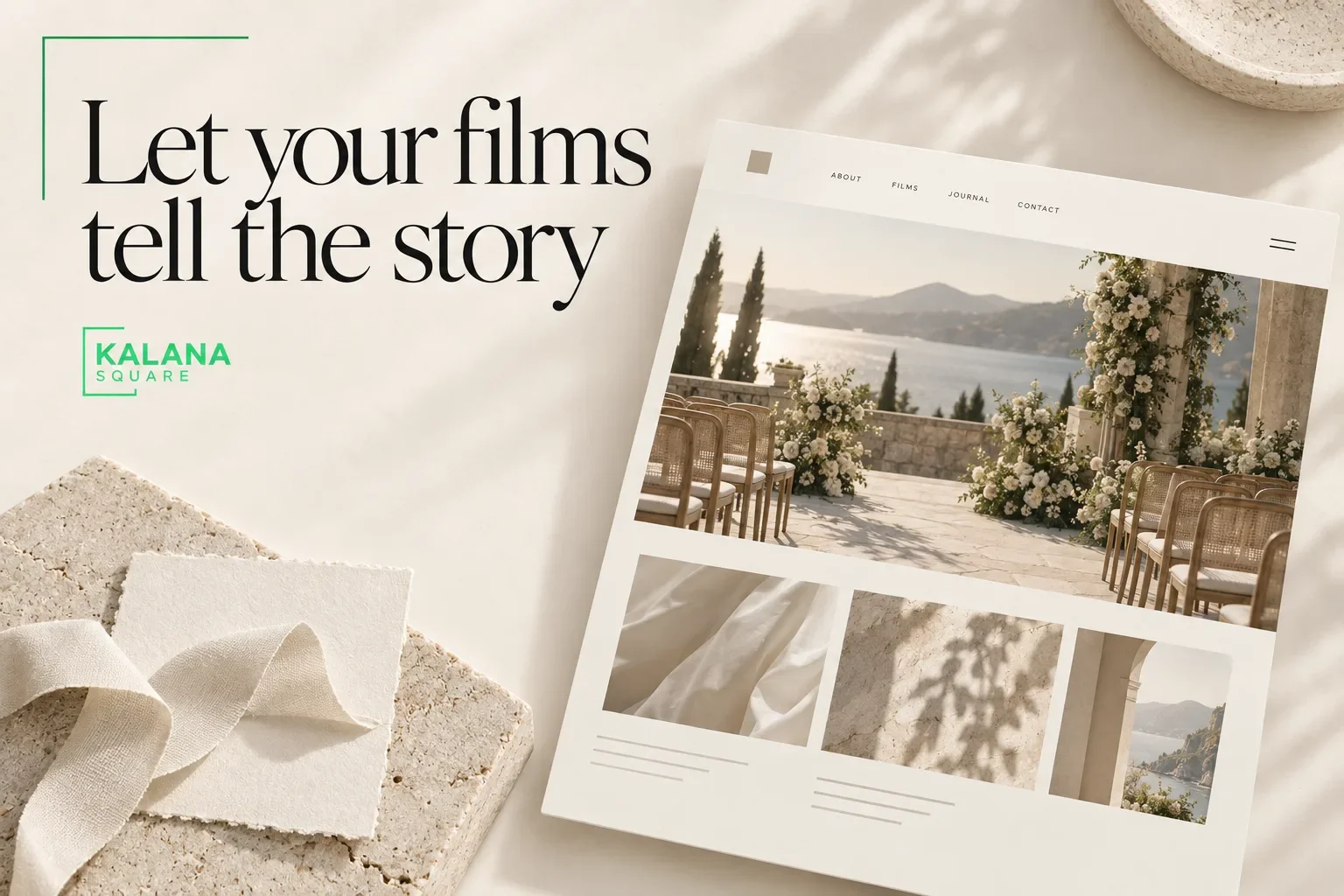
A wedding videography website needs to communicate the filmmaker’s style, give couples a useful way to explore the work and make an availability enquiry straightforward.
The Fletcher Films project provides a practical example of that brief. This case study explains the documented scope of the Squarespace website and the wider design lessons a wedding filmmaker can apply when planning a portfolio.
The client and the website brief
Fletcher Films is a UK-based luxury wedding videography business working across the UK, Europe and beyond. The project brief called for a refined, cinematic website that reflected its emotional storytelling approach.
Kalana Square’s published project record describes a minimal editorial Squarespace website with a curated wedding film gallery, a weddings showcase, an About page and a contact or availability form. View the Fletcher Films portfolio project
Those are the documented deliverables. The public project record does not provide before-and-after traffic, enquiry or booking figures, so this article does not claim a measured performance increase.
The following sections explain design principles relevant to that kind of project. They are recommendations for videography websites, rather than claims about undocumented project testing or client results.
Let visitors understand the filmmaking style
Wedding videography is a considered purchase. Couples need to judge whether the filmmaker’s approach feels right for their celebration, personalities and expectations.
A homepage should therefore introduce the style clearly before presenting a large collection of work. Use a concise explanation of the approach and a carefully selected film or visual introduction.
Avoid relying entirely on abstract language such as timeless, authentic or unforgettable. Those words can be meaningful, but visitors still need to see and understand the work behind them.
The website’s typography, spacing and image treatment should support the films without competing for attention. A restrained design gives the work room to establish its own character.
Curate the gallery around useful choices
A portfolio does not become stronger simply by containing more videos. Select work that represents the types of weddings and storytelling the business wants to attract.
Give each featured project a clear title and enough context to help visitors choose what to watch. Location, venue or an appropriate description can make a collection easier to explore.
Keep navigation predictable. Couples should be able to move between projects and return to the main gallery without losing their place.
If the portfolio contains very different film formats, explain them. A short teaser and a longer highlight film may serve different purposes; the viewer should understand what they are opening.
Add context without overpowering the film
A short project introduction can help a visitor understand the setting and creative approach. Include only details you have permission to publish and that are relevant to evaluating the work.
For example, a description might explain the atmosphere of the day or the relationship between the venue and the film’s visual style. It should not invent a couple’s feelings or quote private comments without approval.
Use ordinary page text for that context, rather than placing every important detail inside video titles or graphics. This also makes the page more useful to visitors who cannot immediately watch with sound.
Treat the written material as part of the portfolio experience, not an afterthought added only for search keywords.
Make the person behind the camera visible
Couples are choosing someone who may spend much of their wedding day around them. An About page can help them understand the filmmaker’s personality, experience and way of working.
Explain what the process feels like in concrete terms. Does the filmmaker prefer an unobtrusive approach? How is preparation handled? Who will attend on the day? Only include statements that reflect the actual service.
A relevant portrait and a clear introduction can support trust. Avoid making the page a long career history with no connection to the couple’s decision.
Link naturally from the portfolio to the About information and then to the enquiry route.
Ask for the information needed to check fit
An availability form should help the business begin a useful conversation. Wedding date, location or venue, contact details and a short description of the plans may be appropriate starting points.
Keep the form proportionate. Couples should not need to complete a detailed production questionnaire before finding out whether the filmmaker is available.
Explain what happens next and use a response-time statement the business can reliably meet. If packages or minimum investment are public, make that information easy to find before submission.
After submission, provide a clear confirmation. A silent page refresh can leave visitors unsure whether their enquiry arrived.
Review the video experience on a phone
Test the page as a potential client would use it: opening a project, starting playback, adjusting sound and returning to the gallery.
Use a strong preview image and make playback controls understandable. Avoid requiring every visitor to load several large videos before they can read the page.
Check the surrounding content as well. Titles, descriptions and enquiry buttons should remain readable, and a video player should not create unexpected horizontal scrolling.
If a third-party video service is used, include it in the website’s ongoing review routine. A changed privacy or embedding setting can affect how a portfolio item appears.
What should a filmmaker measure after launch?
Start with the business objective: relevant availability enquiries and the conversations they produce. Track which pages attract visitors and, where the implementation supports it, how people move from the portfolio to contact.
Ask prospective clients which work helped them decide to enquire. This qualitative feedback can complement analytics and guide future portfolio curation.
Do not treat video plays as bookings. A visitor may enjoy a film without being a suitable client, while a serious prospect may contact the business after watching only a small selection.
Use actual results to improve the website over time, keeping the distinction between delivered design work and measured outcomes clear.
Frequently asked questions
Does a wedding videographer need individual project pages?
They can be useful when each film benefits from context and a direct link. A smaller portfolio may begin with a well-organized gallery and expand as meaningful project material becomes available.
Should every film autoplay?
Not automatically. Consider loading, sound, accessibility and the viewing context. Let the purpose of the section determine the playback behavior.
Should a portfolio include pricing?
Include accurate pricing or investment guidance when it helps couples judge fit. If quotes depend on travel, coverage or deliverables, explain those factors clearly.
Create a Squarespace portfolio around your films
The Fletcher Films project demonstrates a documented combination of editorial presentation, film showcases, personal context and an enquiry route. Its value as a reference lies in that scope, without needing invented performance claims.
Explore the Fletcher Films project, then schedule a consultation to discuss a Squarespace website for your videography business. Kalana Square can help organize your work and design a clear path from viewing to enquiry.